An Engineer's Mindset
"As an engineer, I am always skeptical, and every time there is a new result, my first reaction is to look for normal reactions, mundane phenomena that may explain this result, before talking about LENR." That instinct defines his role in the field. Ruer is not trying to prove that something extraordinary is happening. He is trying to rule out everything ordinary first.
It was tested directly when an explosion occurred in Jean-Paul Biberian’s laboratory. Some in the community speculated that the blast might have been nuclear in origin.Ruer disagreed.
He went and studied the physics of explosions, learned the critical distinction between deflagration and detonation, and conducted his own small-scale experiments, filming them for good measure. A gentle deflagration produces a mild bump. But under certain conditions, when a flame travels through a narrow tube, it can transition into a supersonic detonation, generating enormous pressure from very small quantities of gas. "I'm quite convinced that this 'nuclear explosion'… was not a nuclear explosion, but a hydrogen oxygen explosion."
His most sustained contribution has been in calorimetry, the precise measurement of heat, which constitutes the central methodological challenge in any LENR experiment claiming to produce excess energy. He designed a high-temperature calorimeter for hydrogen experiments, performing the calculations and heat-flow simulations himself. When he reviewed existing setups, he found problems. So he redesigned them.
More recently, he developed what he calls a “no-loss airflow calorimeter.” Airflow calorimeters appear simple: measure air temperature in and out, calculate heat. But in practice, losses distort the result. “What you measure is not really representative…” His design aims to eliminate that. “With this calorimeter, there is absolutely no heat losses… What you measure is everything coming out.” He defines his role carefully: “I am not a researcher… my skill is in engineering.”
“Tell me how it works,” he said, “and I will make it work on an industrial basis.”
It’s both a promise - and a division of labor.
Managing Hard Problems
“What happens to us almost every day?” Ruer said. “It works—but we don’t know why.” That tension defines the field.
Some experiments produce measurable excess heat, but only under conditions that don’t align with earlier expectations. Instead of operating at 300 to 400 degrees Celsius, as in earlier Japanese work, some of the most promising results now appear at far higher temperatures—700, 800, even 900 degrees.Why temperature matters so much remains unclear.
For Ruer, that uncertainty is not evidence—it is a warning.“You have to make sure that because of this high temperature, you don’t have other phenomena that would explain the results,” he said. The risk is not that something new is happening, but that something familiar is being misread under extreme conditions.
That caution carries through to the field’s most persistent problem: reproducibility. “At times some researchers claim to get 14 watts, 20 watts,” he said. “And I become skeptical again, because others obtained only a few watts with a similar setup. It’s strange . You don’t know why.” Run the same experiment again, with a new sample, and it yields a few watts.” The field has signals—but not control.
Ruer also identifies what might be called a structural problem in the organization of LENR research. Too many groups, he argues, are working in isolation on bespoke apparatus. "Maybe there are too many experimental setups these days, and everybody is convinced that he wants to make his own system… and when you develop an experimental thing, it takes a lot of energy from you to make this thing work. And you don't do anything else. So… you are a prisoner to your own device." The contrast with his experience in industry is sharp. "In the industry… when you develop a project, there is one project manager, and the program is very well defined. But with universities and research laboratories, it does not work like that. Freedom of research is a major word, and if you start to explain to people you don't have freedom, you have to do this and that… it doesn't work."
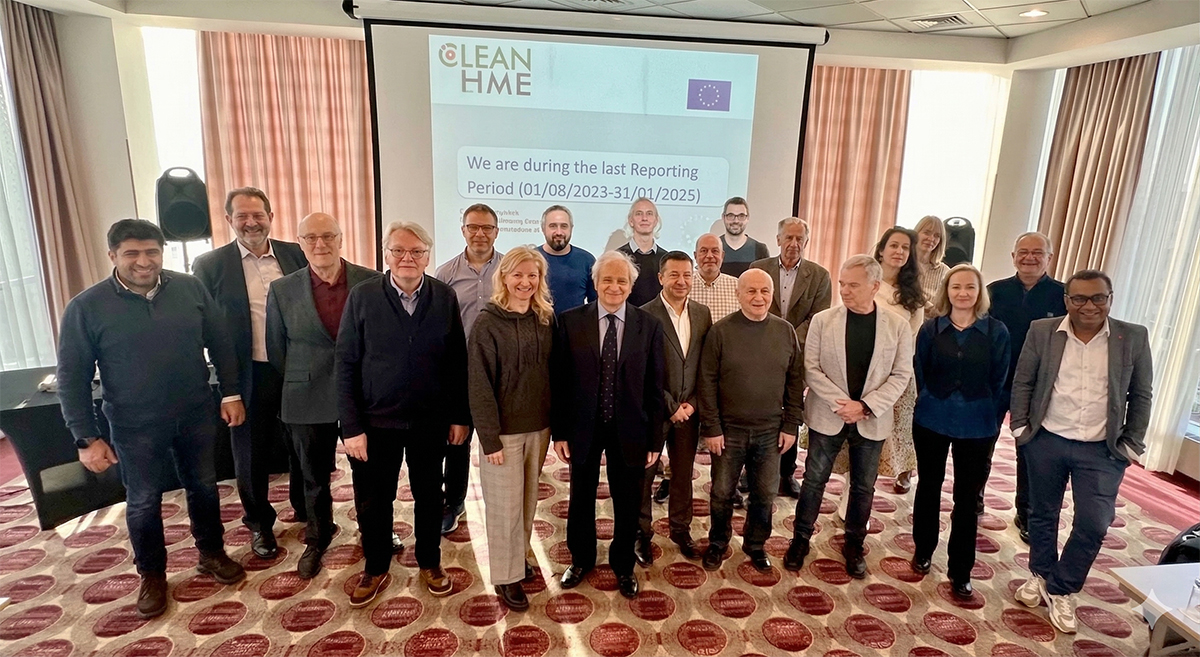
What the field needs, in his view, is something closer to a Manhattan Project, with a goal and a real manager, not merely a coordinator. The European CleanHME project offered a glimpse of what coordinated effort can achieve: one team developed nanoparticle materials, another tested them using Ruer's calorimeter, and the results were genuine. "To work in isolation, it would never have been done," he said. But the project's funding is ending, and renewal is uncertain. "We ask for it, but now, we don't have the money, and others decide if we are funded or not… I am not very optimistic, simply because there is a lack of public money in Europe."