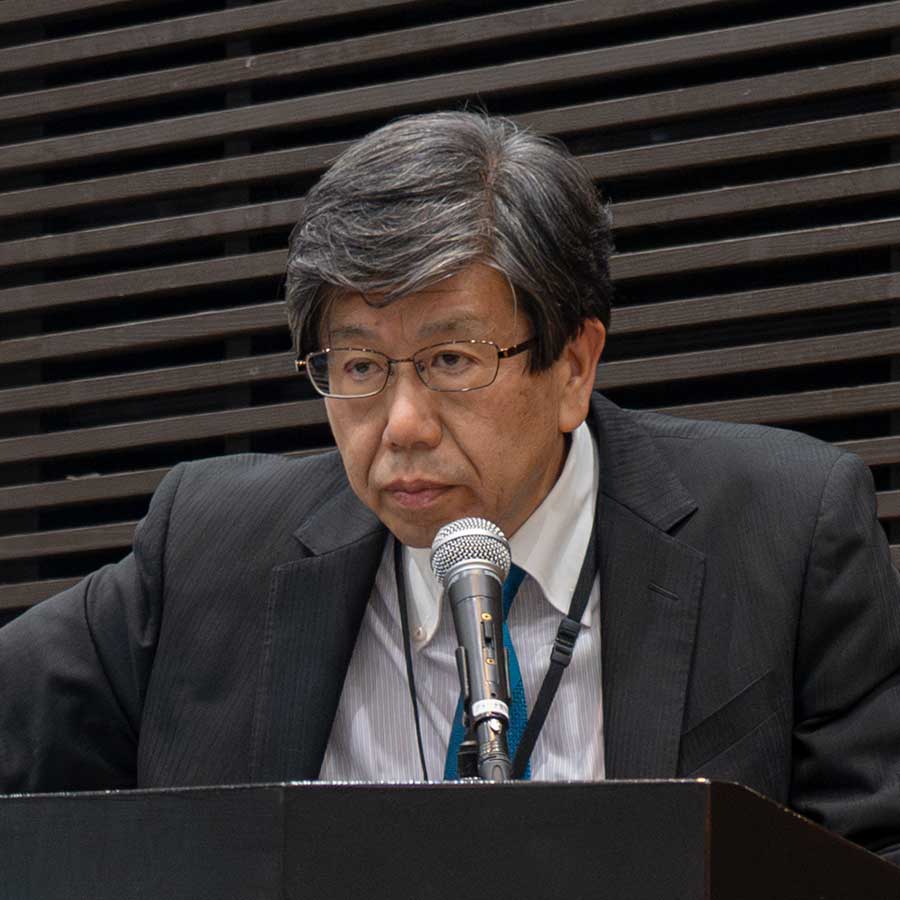
From Electrolysis to Gas Loading
The trajectory of Iwamura's experimental work over those decades traces, in miniature, a broader evolution in the field. Like many researchers of that generation, he began with the original Fleischmann-Pons approach: passing electrical current through heavy water using a palladium electrode, in the hope of driving hydrogen isotopes close enough together to fuse. The results were sporadic but occasionally dramatic. "Sometimes we get enormous heat. [But] the probability was very low."
More consequential, however, was what he found when he examined the palladium samples after heat-producing runs. Elements appeared that should not have been there. "We found some strange elements, foreign elements, after heat-producing samples. This observation suggested the possibility of nuclear transmutation."Transmutation, the conversion of one chemical element into another, is a hallmark of nuclear reactions. It is not something that chemical processes can produce. Finding foreign elements in the samples after an experiment suggested that whatever was generating the excess heat might also be changing the composition of the materials themselves.
This observation proved decisive in redirecting Iwamura's research. If transmutation was occurring, he wanted to study it under conditions more controlled than an electrochemical cell could provide. The liquid electrolyte introduced impurities that complicated analysis. Gas-phase experiments, conducted in vacuum chambers, offered a much cleaner environment, and Iwamura's team at Mitsubishi had the relevant expertise. "We were familiar with vacuum chamber technology." The move toward cleaner experimental conditions reflected a conviction that would define his subsequent career: that rigorous control of materials and environment is essential to producing interpretable results. As he told me, "A clean environment is the key to get this phenomenon. Many impurities affect the reaction."
The method they developed was distinctive. Rather than electrochemistry, they passed deuterium gas through thin-film samples made of alternating layers of palladium and calcium oxide, then they examined the surfaces for evidence of elemental change. The results became some of the most widely discussed in the field. The most prominent finding was the apparent conversion of cesium into praseodymium. Because praseodymium is a rare element, difficult to attribute to laboratory contamination, its detection carried particular evidentiary weight. The team also reported conversions of barium into samarium and of carbon into silicon, results documented across more than a decade of publications and conference presentations.
One set of experiments illustrates the care with which Iwamura approached the problem of proof. Natural barium is a mixture of several isotopes, with barium-138 being the most common. When his team used natural barium as a starting material, they observed samarium-150 as the product. When they substituted barium enriched in a different isotope, barium-137, the product shifted accordingly, to samarium-149. This correspondence between input and output isotopes, in Iwamura’s view, is consistent with a nuclear process rather than contamination. "If we change the isotopic ratio from the initial element, we got the unnatural, not natural isotopes after transmutation. So it was a very exciting result."
This work earned Iwamura the Giuliano Preparata Medal from the International Society for Condensed Matter Nuclear Science in 2004. However, funding constraints prevented him from pursuing the barium transmutation line further. It remains something he would like to return to.
"His collaboration has now ended, and Iwamura has returned to his basic research. 'Clean Planet wants to commercialize the technology... but I would like to continue fundamental research... I would like to see unexpected results'."
Iwamura on his philosophy
Tohoku University and the Shift to Energy
In 2015, Iwamura left Mitsubishi and joined Tohoku University as a Research Professor, where the nature of his work shifted significantly. He joined a collaborative division working with Clean Planet, Inc., a Japanese company pursuing the commercialization of heat-generating reactions in metal-hydrogen systems. The experimental focus moved from transmutation to energy production, and the materials shifted from the expensive palladium-deuterium system to nickel and ordinary hydrogen, both cheap and abundant.
There were many important practical implications of this change. In the early days of cold fusion, a successful experiment might warm water by a few degrees. "From the viewpoint of science, it's very nice, but in the view of application, it is not so fascinating," he explained. The nickel-hydrogen experiments at Tohoku operated in a different regime entirely, raising gas temperatures by hundreds of degrees, well into the range where the heat could drive industrial processes or generate electricity. The energy released per hydrogen atom absorbed was far greater than any known chemical reaction could account for. "The phase has changed," Iwamura explained. Nickel and hydrogen are inexpensive and widely available. The temperatures are industrially relevant. The combination has drawn serious corporate interest in a way that the earlier palladium-deuterium work never could.
Iwamura and his colleagues also made the discovery that the researchers could deliberately trigger sudden bursts of heat generation. By briefly reducing the power supplied to the heater and then restoring it, even by a small amount, they observed sharp, short-lived spikes in surface temperature lasting several minutes. These experiments were conducted under near-total vacuum conditions, with negligible gas remaining in the chamber. Under such conditions, there was essentially nothing present that could burn or react chemically. The energy had to be coming from somewhere else. The finding suggested a potential method for controlling the reaction, a critical requirement for any eventual practical application. This work appeared in the Journal of Condensed Matter Nuclear Science and the Japanese Journal of Applied Physics.
Iwamura and Clean Planet’s collaboration has now ended, and Iwamura has returned to his basic research. "Clean Planet wants to commercialize the technology. But I would like to continue fundamental research. I would like to see unexpected results."
In 2025, Iwamura took up a position as Visiting Professor at Yokohama City University, in the Department of Materials System Science. His wife lives in Yokohama, and for years he commuted weekly to Sendai for work at Tohoku. At Yokohama, he plans to resume transmutation experiments alongside the nickel-hydrogen energy work, and he has colleagues at Yokohama who are eager to join the research. His longtime collaborator Professor Jirohta Kasagi continues experiments at Tohoku, maintaining continuity with the work done there.
Iwamura remains deeply engaged with the international research community. He has served as Vice President of the International Society for Condensed Matter Nuclear Science since 2023, following two decades on the society's executive committee. He is Vice President of the Japan CF-Research Society, has taught a multidisciplinary science course at Keio University's graduate school since 2013, and co-chaired two major international conferences in the field. In September 2024, he presented the status of Japanese research in this area to the European Parliament in Strasbourg.