Search Site
Ask LENRBot
Anthropocene Institute co-founder and president Carl Page spoke to the next generation of energy researchers at the ARPA-E Energy Innovation Summit in San Diego on April 8, 2026. His talk, titled Four ARPA-E Springboards, made the case for an engineering approach to the energy transition.
The talk framed climate change as an engineering challenge requiring large-scale innovation, industrial capacity, and long-term systems thinking. But it contrasted this approach with climate strategies focused primarily on mitigation or constrained consumption, arguing instead for a model centered on technological expansion, restoration, and abundant clean energy. This engineering ethos, which shapes the Anthropocene Institute's projects, points toward a climate-restoration strategy that allows us to continue growing. Cleaner, cheaper, and more scalable energy systems could enable both economic growth and environmental restoration.
How is this abundance achieved? We need to be solutions-oriented when tackling our most pressing climate problems. The talk repeatedly returned to the idea that climate and energy systems should be approached through practical engineering: identify constraints, improve systems, and scale viable solutions. In this way, the engineering ethos at the heart of the argument is not just about technical competence but also about imagination, creativity, and a commitment to finding solutions for the sake of climate restoration and technological growth. We need to innovate technical solutions, but we also need to imagine the world in a substantially different way and to think concretely and analytically about what would have to be true and available for us to bring this better world into being. A restored environment and a materially better world are not opposed goals, and we do not have to settle for austerity or a degraded planet. We can build better alternatives if we can innovate our technologies and our mindsets.
Moreover, we need to change our targets with an eye toward an "engineering safety margin," a non-negotiable cushion that can help humanity weather unforeseen challenges, so that unexpected pressures do not result in failure. This approach is typical for engineers but less so for those who imagine and enact climate policy. We need space to grow and learn, and to make mistakes, so we have to have bolder visions and goals for climate restoration.
"There is no actual shortage of energy on this planet," Page said, arguing that today's constraints stem more from infrastructure, regulation, and deployment bottlenecks than from physical scarcity. Between institutional blind spots, cartel-like energy infrastructures, and regulatory capture, energy is limited. But it doesn't have to be this way. If we removed some of these blockages, we might be able to drastically lower energy prices and scale to much higher levels. We are stuck in a fossil fuel economy, but not by necessity. We have alternatives, but we aren't unlocking their potential.
Getting out of this "punctuated equilibrium" and escaping stasis is key. And we may be on the precipice of this. "It looks like nothing is ever changing," Page said, "and then it changes really fast." The climate crisis is creating an inflection point, forcing the issue. Still, other pressures like war are making it more critical than ever to rethink the way we organize our energy landscape–and begin building a better one.
Emerging technologies must be prepared for rapid deployment as market and geopolitical conditions evolve. We need to be ready to harness clean energy alternatives as the present crises create an opening for them. This is key to getting unstuck from an energy infrastructure that is destroying our planet's health and imposing massive economic costs. We need ingenuity to do this, but we may also need to recognize the solutions already available. Dramatically cheaper clean energy could fundamentally change the economics of pollution control, industrial decarbonization, and resource recovery. "We know how to fix all of our problems. We know how to clean up all our pollution. It just doesn't seem economic if you have to burn coal to make the energy," Page said.
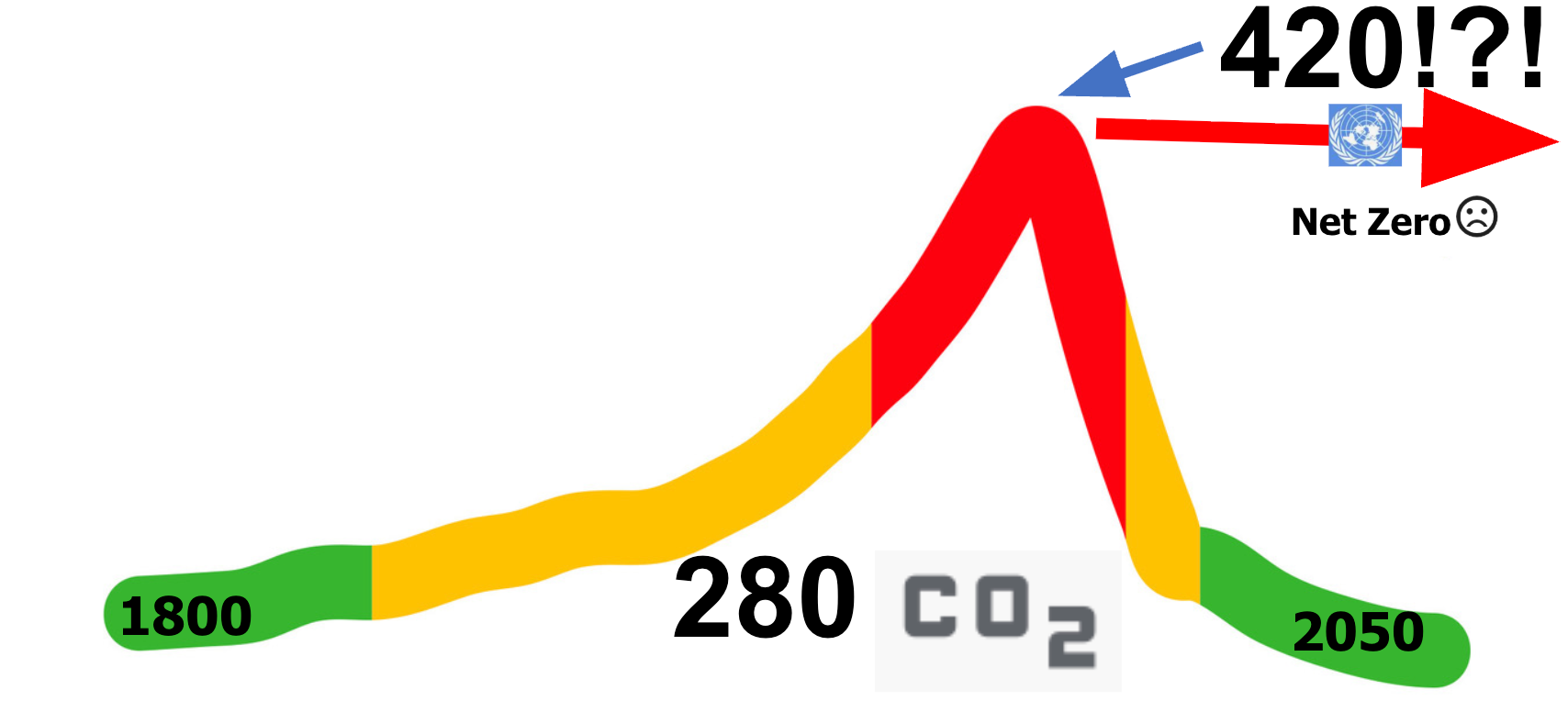
This reframing helps us work toward meaningful goals of climate restoration. The atmosphere has already crossed dangerous thresholds, so we cannot afford simply to slow down. We are now at 424 ppm CO₂, but safe levels are closer to 280 ppm. Current climate targets are insufficiently ambitious; stabilization alone is inadequate without long-term atmospheric drawdown.
Alongside clean energy, the Anthropocene Institute also works on oceans as a key lever for climate restoration. Ocean acidification is one outcome of elevated CO₂. And it's much easier to see this effect without complex computations or climate models. Just like with carbonated water, "too much CO₂ makes the water bitter." The downstream effect: suppressed plankton populations and massive bioloss.
Ocean degradation can be catastrophic, but we need not accept doom and gloom. We just need to harness the tools we have more imaginatively by learning to look at them differently. What if we had nanobots that ran on sunlight, reproduced easily, drew carbon out of the water, and could spread all over the oceans? It's not the stuff of science fiction but rather a phytoplankton bloom. We can think big if we can think small and across scales and ecosystems.
Biological systems already perform many of the carbon-cycling functions researchers seek to replicate technologically. The point is not to design and geoengineer little machines, but to use what's already there. Diatoms and other forms of phytoplankton are potentially important tools for carbon drawdown and marine ecosystem restoration. Diatoms, a class of phytoplankton, can help restore the very same nutrient cycles that support their populations. More diatoms can draw down atmospheric carbon and enhance marine productivity–crucial for rebuilding fisheries. "All we have to do is make sure they have the right nutrients, and they'll spring into existence for us."
We may also need to recover things we forgot–or restore environmental functions that human life has disrupted. Whales, for instance, historically played a major role in nutrient circulation within marine ecosystems, and industrial whaling disrupted ocean processes that once supported large plankton populations. We killed off the vast majority of sperm whales to make machine oil, and "that's more biomass than all of the mammals that survive."
We also have to expand our imagination of nuclear energy, again by thinking differently or at different scales. Advanced fission is the next threshold of innovation. We need better reactor designs that rethink the conventional light-water structure. With public opinion on nuclear shifting toward broad, bipartisan support—a finding documented in Anthropocene Institute research—the moment is ripe to invest in more sophisticated nuclear power.
Nuclear power has been unfairly maligned. Public perceptions of nuclear energy often fail to align with comparative safety and mortality data, which the Institute is helping to correct. Unlike fossil fuels, which have well-documented and severe health consequences, "nuclear saves so many lives." Comparative public health data between coal and nuclear energy show that replacing fossil fuels with nuclear generation has prevented substantial air-pollution-related mortality.
Thus, our received wisdom is not always so wise. Just as net zero is not good enough, and energy markets are not really free, nuclear is not dangerous. Many of our societal intuitions about what climate action looks like do not survive a serious cost-benefit analysis. Science literacy and numeracy require us to think outside of settled habits of thought–many of which are uninformed or, at the very least, unimaginative.
Advanced reactors should be designed for higher operating temperatures, reduced water requirements, and factory-based manufacturing processes intended to lower costs and improve scalability. These reactors would also use less water-intensive cooling processes and produce energy on factory lines rather than through massive construction. This would drastically reduce manufacturing costs while increasing quality. Abundant nuclear energy is possible, and instead of the "regulatory capture" tricks used by traditional energy, it can succeed by innovating using industrial engineering principles. As the Nuclear Regulatory Commission and the Department of Energy shift their priorities and processes, now is the time to design new reactors and deploy them commercially.
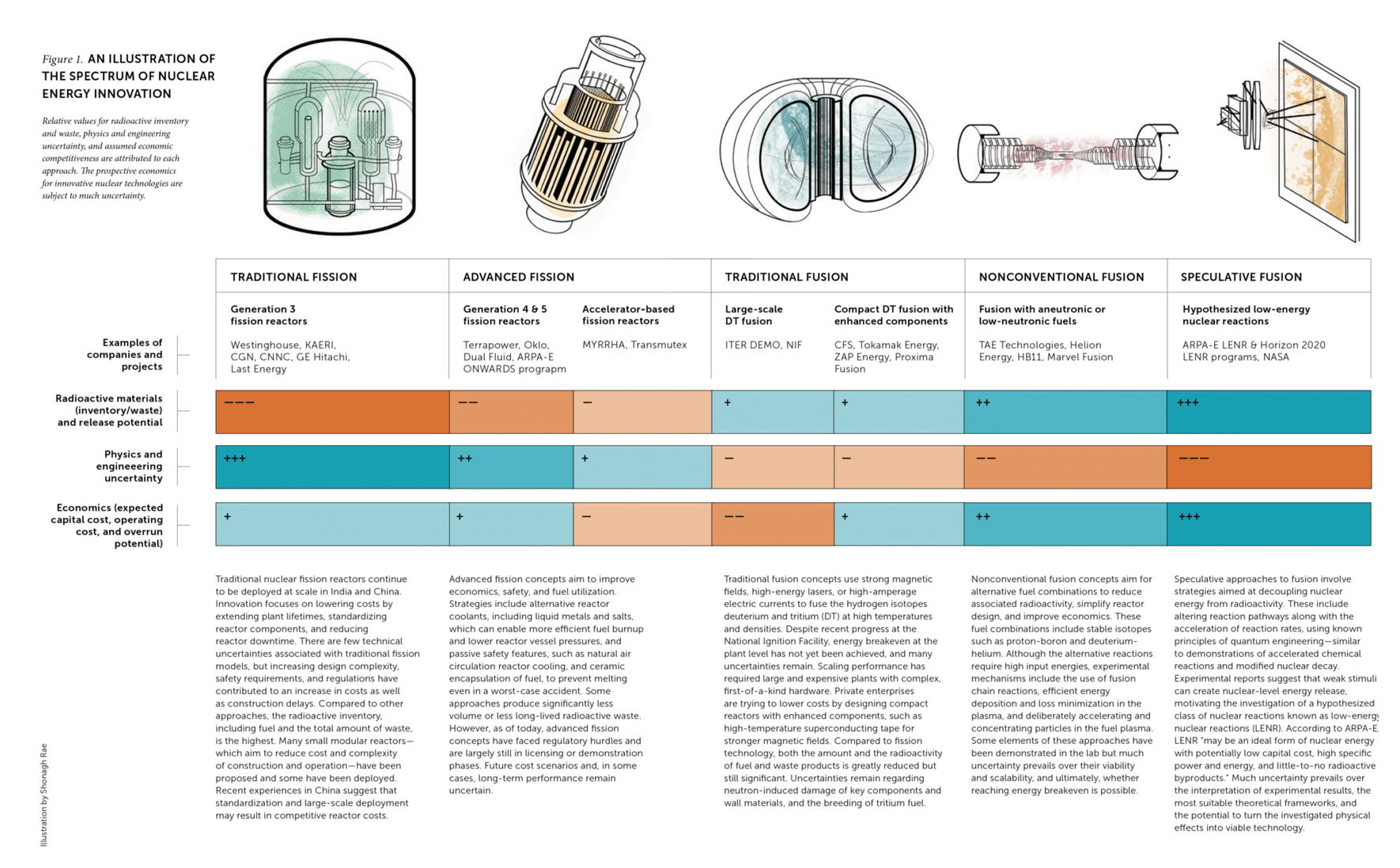
Nuclear innovation must also include innovations in fusion. The work of Dr. Larry Forsley on low-energy nuclear reactions (LENR) calls for a more imaginative approach to technology. LENR researchers are investigating whether nuclear reactions can be induced within metallic crystal lattices. While this won't produce grid-scale electricity, which will remain the province of fission, despite the claims of big fusion startups, LENR might offer energy at a different scale. "You can't put fission in your basement. You can't put it on your airplane. So there's a lot of room for fusion."
The fusion frontier is full of challenges for both traditional plasma fusion and LENR. Solid-state fusion phenomena like LENR have additional scientific burdens and mathematical complexity. But the difficulty of the problem should not be confused with what is possible. The engineering ethos is clear here also: roll up your sleeves, survey possible solutions, try to build the thing, and see what you learn. After all, many devices were invented before we could do the complex calculations to theorize how they worked.
The talk closed with an affirmation of abundance. There is a commonly cited paradox: when energy efficiency or costs go down, we just use more energy. The standard environmentalist worry is that any gains in efficiency will simply be offset by increased total consumption, leaving the pollution problem intractable. But this equation can be reimagined, and technological innovation can change the terms altogether, so we no longer have to worry about the environmental costs of generating energy. "We can manufacture the power we need….if we make energy ten times cheaper, we'll sell twenty times more energy, and the energy industry will make more money." If this is clean energy, we can use it without harming the environment. Technological innovation undoes this paradox. Instead, we are left with an opportunity.
Climate change and ocean acidification are problems we have to solve, but we can solve them without austerity. We do not need to do away with industry, technology, or growth. We just need better industry, better technology, and a different kind of growth. Long-term prosperity should be measured not only through industrial output and energy production, but also through environmental recovery and ecosystem resilience.
How do we get there? We would do well to think more like engineers. We need to build with a margin for failure, manufacture efficiently, and think seriously about the range of available solutions before declaring problems intractable. Hard problems exist, but they are unsolved, not unsolvable. Restoring our climate should be treated exactly this way. "It's not as hard as people think."