Search Site
Ask LENRBot
June 30, 2026

Yasuhiro Iwamura: Three Decades of Studying Anomalous Nuclear Phenomena

Author: Eman Elshaikh
Profession:
Nuclear Engineer & Physicist
Notable Roles:
Group Manager, Mitsubishi Heavy Industries | Research Professor, Tohoku University | Vice President, International Society for Condensed Matter Nuclear Science
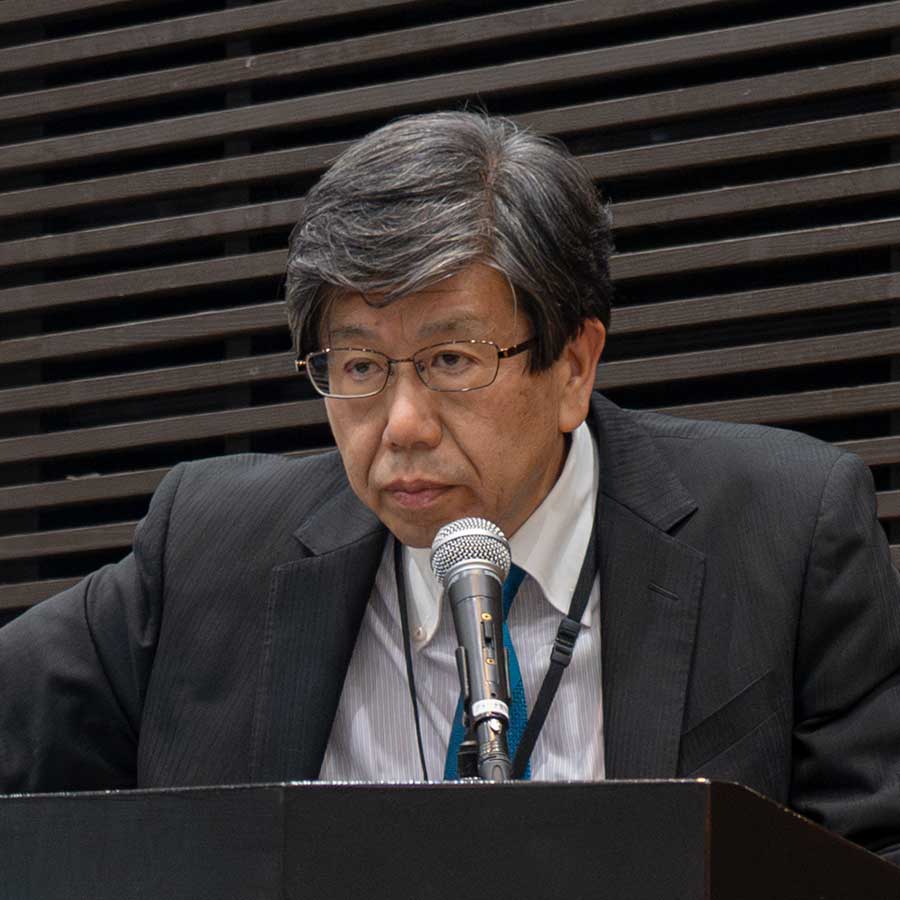
Visiting Professor Yasuhiro Iwamura is a leading nuclear engineer who has challenged conventional physics to legitimize the study of solid state fusion. Through decades of relentless experimentation, he has contributed vital evidence of nuclear transmutation and extreme heat generation, helping transform a controversial discipline into a promising avenue for industrial energy.
Yasuhiro Iwamura always liked making things. As a child growing up in Japan, he spent his time building model cars and constructing small machines. In junior high school, he assembled radios and computers, partly inspired by an older cousin who shared his fascination with electronic devices. Iwamura’s disposition was toward construction, understanding how physical systems behave, and the clean logic of mathematics and physics. His teachers, recognizing his aptitude, urged him toward medicine. He declined. As he told me, "I do not like cutting [the] human body. I love mathematics and physics."

That carried him to the University of Tokyo, where he entered the Department of Nuclear Engineering, drawn by a strong interest in energy science. He completed both his undergraduate and graduate studies there, earning a doctorate in engineering with research in hot fusion. He was twenty-eight years old, settled into a promising career trajectory, when the field he would spend the rest of his life pursuing announced itself.
"For Iwamura, then a doctoral student at Tokyo, the reaction to the announcement was immediate. 'A very small device [producing] very large energy... I was very excited to hear the news'."
Iwamura on the Fleischmann-Pons announcement

The Fleischmann-Pons Announcement

In March 1989, Martin Fleischmann and Stanley Pons announced that they had achieved nuclear fusion in a small electrochemical cell at room temperature. The claim sent shockwaves through physics departments worldwide. For Iwamura, then a doctoral student at Tokyo, the reaction was immediate. "A very small device [producing] very large energy. I was very excited to hear the news."

He was not alone in his excitement. At the University of Tokyo's nuclear engineering department, faculty and graduate students convened to discuss replication of the Fleischmann and Pons experiment. One laboratory was selected to attempt the experiment. Iwamura was not assigned to that group, but a close friend of his was. He kept abreast of the developments and followed the progress with keen interest. "Every time I met him, I asked him about the situation of the cold fusion experiment. But he [said] nothing happened."

The excitement waned, as this null result was sobering. Iwamura trusted his friend's competence and therefore his conclusions, reasoning that cold fusion was not a reliable science. But Iwamura’s curiosity did not disappear. He simply could not reconcile the negative result with Fleischmann's stature as an electrochemist. "Fleischmann [was] a very famous scientist. I could not understand." The question remained open in his mind, unresolved but not forgotten.
"He returned to Mitsubishi and proposed a sustained research program, and it was not long before the results turned weird. 'We started the experiment, and we saw a very strange phenomenon... so I became too involved in this field'."
Iwamura's career at Mitsubishi Heavy Industries

A Career at Mitsubishi Heavy Industries

In 1990, Iwamura joined Mitsubishi Heavy Industries. He was attracted by the company's substantial commitment to basic research. In the first couple of years, cold fusion was not part of his responsibilities. Instead, his work at the company's research division ranged across nuclear engineering problems: fast breeder reactor development, hydrogen energy, combustion research, and a system for identifying hidden explosives using neutron beams.

Then, in 1993, the leadership of Mitsubishi's research division decided to initiate cold fusion experiments. Iwamura was appointed to the effort. His first step was not at the laboratory bench but in a conference hall. He attended ICCF-3, the third International Conference on Cold Fusion, held that year in Nagoya, Japan. He had not yet run any experiments of his own, but he listened carefully to the presentations and spoke with the researchers. The seriousness of what he encountered reoriented his expectations about the field, and he gave the scientists credit for their careful work, revising his previous conclusions that the science was not science. As he attended the talks, he remembers thinking, "They are very serious, seriously making experiments and studying. So I was very impressed by their attitude."

He returned to Mitsubishi and proposed a sustained research program. It was not long before the results turned weird. He saw anomalies for himself. "We started the experiment, and we saw a very strange phenomenon. So I became too involved in this field."

Iwamura would remain at Mitsubishi for twenty-two years, eventually rising to Group Manager in 2011. Cold fusion was never his sole responsibility. Depending on the period and the priorities and attitudes of his superiors, it consumed between ten and forty percent of his time. Maintaining even that fraction required persistent advocacy. Mitsubishi, for all its breadth, was a private corporation with commercial imperatives. "Mitsubishi is a private company, so they should gain money. But cold fusion is at a very early stage, so it is very difficult." The fundamental research division offered some institutional shelter, and the company's existing interests in nuclear power gave the work a degree of contextual legitimacy it might not have enjoyed elsewhere. But support was never guaranteed.. “The research budget changed greatly depending on the boss of my laboratory," he explained. When skepticism prevailed, Iwamura did what he could. "I explained the importance of the cold fusion and the future of the cold fusion, and I persuaded them, and I continued."
"This correspondence between input and output isotopes, in Iwamura’s view, is consistent with a nuclear process rather than contamination. 'If we change the isotopic ratio from the initial element, we got the unnatural, not natural isotopes after transmutation'."
Iwamura on his work

From Electrolysis to Gas Loading

The trajectory of Iwamura's experimental work over those decades traces, in miniature, a broader evolution in the field. Like many researchers of that generation, he began with the original Fleischmann-Pons approach: passing electrical current through heavy water using a palladium electrode, in the hope of driving hydrogen isotopes close enough together to fuse. The results were sporadic but occasionally dramatic. "Sometimes we get enormous heat. [But] the probability was very low."

More consequential, however, was what he found when he examined the palladium samples after heat-producing runs. Elements appeared that should not have been there. "We found some strange elements, foreign elements, after heat-producing samples. This observation suggested the possibility of nuclear transmutation."Transmutation, the conversion of one chemical element into another, is a hallmark of nuclear reactions. It is not something that chemical processes can produce. Finding foreign elements in the samples after an experiment suggested that whatever was generating the excess heat might also be changing the composition of the materials themselves.

This observation proved decisive in redirecting Iwamura's research. If transmutation was occurring, he wanted to study it under conditions more controlled than an electrochemical cell could provide. The liquid electrolyte introduced impurities that complicated analysis. Gas-phase experiments, conducted in vacuum chambers, offered a much cleaner environment, and Iwamura's team at Mitsubishi had the relevant expertise. "We were familiar with vacuum chamber technology." The move toward cleaner experimental conditions reflected a conviction that would define his subsequent career: that rigorous control of materials and environment is essential to producing interpretable results. As he told me, "A clean environment is the key to get this phenomenon. Many impurities affect the reaction."

The method they developed was distinctive. Rather than electrochemistry, they passed deuterium gas through thin-film samples made of alternating layers of palladium and calcium oxide, then they examined the surfaces for evidence of elemental change. The results became some of the most widely discussed in the field. The most prominent finding was the apparent conversion of cesium into praseodymium. Because praseodymium is a rare element, difficult to attribute to laboratory contamination, its detection carried particular evidentiary weight. The team also reported conversions of barium into samarium and of carbon into silicon, results documented across more than a decade of publications and conference presentations.

One set of experiments illustrates the care with which Iwamura approached the problem of proof. Natural barium is a mixture of several isotopes, with barium-138 being the most common. When his team used natural barium as a starting material, they observed samarium-150 as the product. When they substituted barium enriched in a different isotope, barium-137, the product shifted accordingly, to samarium-149. This correspondence between input and output isotopes, in Iwamura’s view, is consistent with a nuclear process rather than contamination. "If we change the isotopic ratio from the initial element, we got the unnatural, not natural isotopes after transmutation. So it was a very exciting result."

This work earned Iwamura the Giuliano Preparata Medal from the International Society for Condensed Matter Nuclear Science in 2004. However, funding constraints prevented him from pursuing the barium transmutation line further. It remains something he would like to return to.
"His collaboration has now ended, and Iwamura has returned to his basic research. 'Clean Planet wants to commercialize the technology... but I would like to continue fundamental research... I would like to see unexpected results'."
Iwamura on his philosophy

Tohoku University and the Shift to Energy

In 2015, Iwamura left Mitsubishi and joined Tohoku University as a Research Professor, where the nature of his work shifted significantly. He joined a collaborative division working with Clean Planet, Inc., a Japanese company pursuing the commercialization of heat-generating reactions in metal-hydrogen systems. The experimental focus moved from transmutation to energy production, and the materials shifted from the expensive palladium-deuterium system to nickel and ordinary hydrogen, both cheap and abundant.

There were many important practical implications of this change. In the early days of cold fusion, a successful experiment might warm water by a few degrees. "From the viewpoint of science, it's very nice, but in the view of application, it is not so fascinating," he explained. The nickel-hydrogen experiments at Tohoku operated in a different regime entirely, raising gas temperatures by hundreds of degrees, well into the range where the heat could drive industrial processes or generate electricity. The energy released per hydrogen atom absorbed was far greater than any known chemical reaction could account for. "The phase has changed," Iwamura explained. Nickel and hydrogen are inexpensive and widely available. The temperatures are industrially relevant. The combination has drawn serious corporate interest in a way that the earlier palladium-deuterium work never could.

Iwamura and his colleagues also made the discovery that the researchers could deliberately trigger sudden bursts of heat generation. By briefly reducing the power supplied to the heater and then restoring it, even by a small amount, they observed sharp, short-lived spikes in surface temperature lasting several minutes. These experiments were conducted under near-total vacuum conditions, with negligible gas remaining in the chamber. Under such conditions, there was essentially nothing present that could burn or react chemically. The energy had to be coming from somewhere else. The finding suggested a potential method for controlling the reaction, a critical requirement for any eventual practical application. This work appeared in the Journal of Condensed Matter Nuclear Science and the Japanese Journal of Applied Physics.

Iwamura and Clean Planet’s collaboration has now ended, and Iwamura has returned to his basic research. "Clean Planet wants to commercialize the technology. But I would like to continue fundamental research. I would like to see unexpected results."

In 2025, Iwamura took up a position as Visiting Professor at Yokohama City University, in the Department of Materials System Science. His wife lives in Yokohama, and for years he commuted weekly to Sendai for work at Tohoku. At Yokohama, he plans to resume transmutation experiments alongside the nickel-hydrogen energy work, and he has colleagues at Yokohama who are eager to join the research. His longtime collaborator Professor Jirohta Kasagi continues experiments at Tohoku, maintaining continuity with the work done there.

Iwamura remains deeply engaged with the international research community. He has served as Vice President of the International Society for Condensed Matter Nuclear Science since 2023, following two decades on the society's executive committee. He is Vice President of the Japan CF-Research Society, has taught a multidisciplinary science course at Keio University's graduate school since 2013, and co-chaired two major international conferences in the field. In September 2024, he presented the status of Japanese research in this area to the European Parliament in Strasbourg.

"Asked to characterize the experience of working in this field, Iwamura's answer is revealing. 'Cold fusion experiments are very difficult and very complicated... but for me, very complicated and difficult–I love it'."
Iwamura on his philosophy

Difficult but Fascinating

Asked to characterize the experience of working in this field, Iwamura's answer is revealing. "Cold fusion experiments are very difficult and very complicated. But for me, very complicated and difficult–I love it." Other areas of engineering, he notes, are more predictable and easier to plan. Cold fusion resists that kind of planning. "Often, we got unexpected results. That is very difficult to understand, but very fascinating."

The interdisciplinary demands compound the challenge: "So many fields gathered in this. Physics, but also chemistry, material science and nanoscience." Iwamura began as a physicist and nuclear engineer. Over three decades, the work has required him to develop expertise in nanotechnology, surface analysis, vacuum science, and the detailed behavior of metals at the nanoscale. The field demanded this breadth of him, and he acquired it.

Among the recent puzzles occupying his attention is the question of anomalous oxygen. After heat-producing experiments, his team has found unexpectedly high concentrations of oxygen deep within the nickel samples, well beyond what ordinary exposure to air after the experiment could explain. Even samples deliberately baked in air at 700 degrees Celsius showed lower oxygen levels than some of the heat-generating samples. The isotopic makeup of the oxygen sometimes differs from what is found in nature. Iwamura suspects transmutation may be responsible, but proving it presents a particular difficulty, precisely because oxygen is everywhere. "Cesium to praseodymium is easy to prove, but oxygen transmutation is very difficult to prove." The team has also observed localized hot spots on sample surfaces where temperatures were high enough to melt the nickel, visible under electron microscopy.

These are the kinds of observations that sustain a career spent at the boundary of the known. "I am very happy to find very unexpected results."
Photo of the CleanHME European Project group. Ruer is the 3rd from the left, next to the project coordinator Prof. Konrad Czerski
"On a longer horizon, perhaps a century out, he imagines something more ambitious. 'This technology is suitable for drones or small airplanes, a very small and powerful energy source... but we have many, many tasks to solve'."
Iwamura on Solid State Fusion Value

A Jump from Normal Physics

Iwamura is cautiously optimistic. He believes the field's understanding of what is actually happening has undergone a fundamental revision since 1989. "In 1989, people thought DD fusion, or some hot fusion-like reactions, occur in the small cell. Everybody thought that. Actually, it was wrong." The early assumption was that two hydrogen nuclei were somehow being forced together, as in a conventional fusion reaction. Iwamura now suspects that what is occurring is something quite different: many-body reactions involving hydrogen and the host metal itself, a category of nuclear process with no established theoretical framework. His published hypotheses, which he describes as preliminary and deliberately cautious, have appeared in the Japanese Journal of Applied Physics. He acknowledges holding more developed ideas that he has not yet felt ready to advance publicly. "This field, many people attack [it]. So I am very conservative in my descriptions."

Asked whether his hypotheses fit within existing physics or would require new theory, his answer is direct. "Very disruptive. A jump from normal physics." He says this with the measured composure of someone who has spent thirty-five years accumulating evidence that existing frameworks cannot readily accommodate.

The commercial landscape has shifted as well. Beyond Clean Planet, Iwamura notes that several major Japanese corporations maintain active interests: Nissan, Denso (a member of the Toyota corporate family), and Mitsubishi Heavy Industries, where his former colleagues continue research on using transmutation to neutralize radioactive waste. The involvement of established industrial players lends the field a credibility it lacked for most of its history.

But Iwamura's most urgent concern is generational. For decades, the field's marginality discouraged young researchers from entering it. "For a long time, many journals reject[ed] papers in this field." The result is a community that has aged in place. "In 1989, I was a young man. But now I am more than sixty." 

But it seems the situation is changing. "Recently, my papers are accepted in the major journals. So young researchers started to join this field." However, he acknowledges that the pace is not fast enough. He has attempted to establish a national research project in Japan and has not yet succeeded. "I tried to make a national project. I failed. But I will continue to try."

His vision is specific: to gather the scattered young researchers who are interested but lack institutional support, give them funding and direction, and produce results in established journals. "It's my hope and my dream."

As for the technology's long-term promise, Iwamura allows himself to think in broad terms. In the near term, he envisions distributed energy for buildings and data centers, and industrial process heat for chemical manufacturing. On a longer horizon, perhaps a century out, he imagines something more ambitious: compact, powerful energy sources for drones, small aircraft, robots, and vehicles. "This technology is suitable for drones or small airplanes, a very small and powerful energy source. But we have many, many tasks to solve."

The most pressing of those tasks is control. The ability to generate anomalous heat has been demonstrated. The ability to modulate it reliably has not. "We can get the heat, very large heat, using hydrogen and nickel. But we cannot control the heat level." The intentional heat burst experiments represent a step forward, but a robust, generalizable method for governing power output remains an open problem.

Iwamura has spent thirty-five years in a field that resists prediction and sits outside established theoretical frameworks. He has watched colleagues retire, funding evaporate, and journals close their doors. He has also watched elements appear where they should not exist, heat emerge in quantities no known chemistry can explain, and isotopic ratios shift in patterns that point toward nuclear processes. Asked what keeps him going, his answer carries the weight of long experience and no small measure of commitment: "Very complicated and difficult, so I love it."

Share on Social Media

BIOGRAPHY

Yasuhiro Iwamura

Yasuhiro Iwamura was a doctoral student when Fleischmann and Pons made their famous announcement in 1989. That moment sparked a curiosity he has never set down. Over thirty-five years of research, he has produced some of the most carefully documented evidence of nuclear transmutation and anomalous heat generation in metal-hydrogen systems. Read our interview with Iwamura to learn how one scientist's persistence and love of "very complicated and difficult" problems is helping to build a new field of energy science.
©2026  | Solid State Fusion  
A Project By Anthropocene Institute
chevron-downarrow-left